
v2.0 of mood.camera re-works large parts of the rendering pipeline to deliver greater consistency, improved tone mapping, colours and filmic effects. Some of these changes are subtle, but combined they deliver more refined look overall.
The most significant change in this update is a complete rework of the Dynamic Range processing.
I think Dynamic Range (or rather, the lack of it) is a fundamental part of the "film look". However, the previous implementation had several limitations:
To address this, I have reworked this part of the pipeline from the ground up. This was a pretty considerable task and required a lot of tuning to get it looking right plus working on all devices. However it gives far greater control over the tone mapping and in my opinion gives much more consistent and pleasing results.
Overall the effect is more balanced than the previous iteration and is generally less extreme but it depends on the scenario. Also, unlike the previous implementation, it is now available on non-pro iPhones.
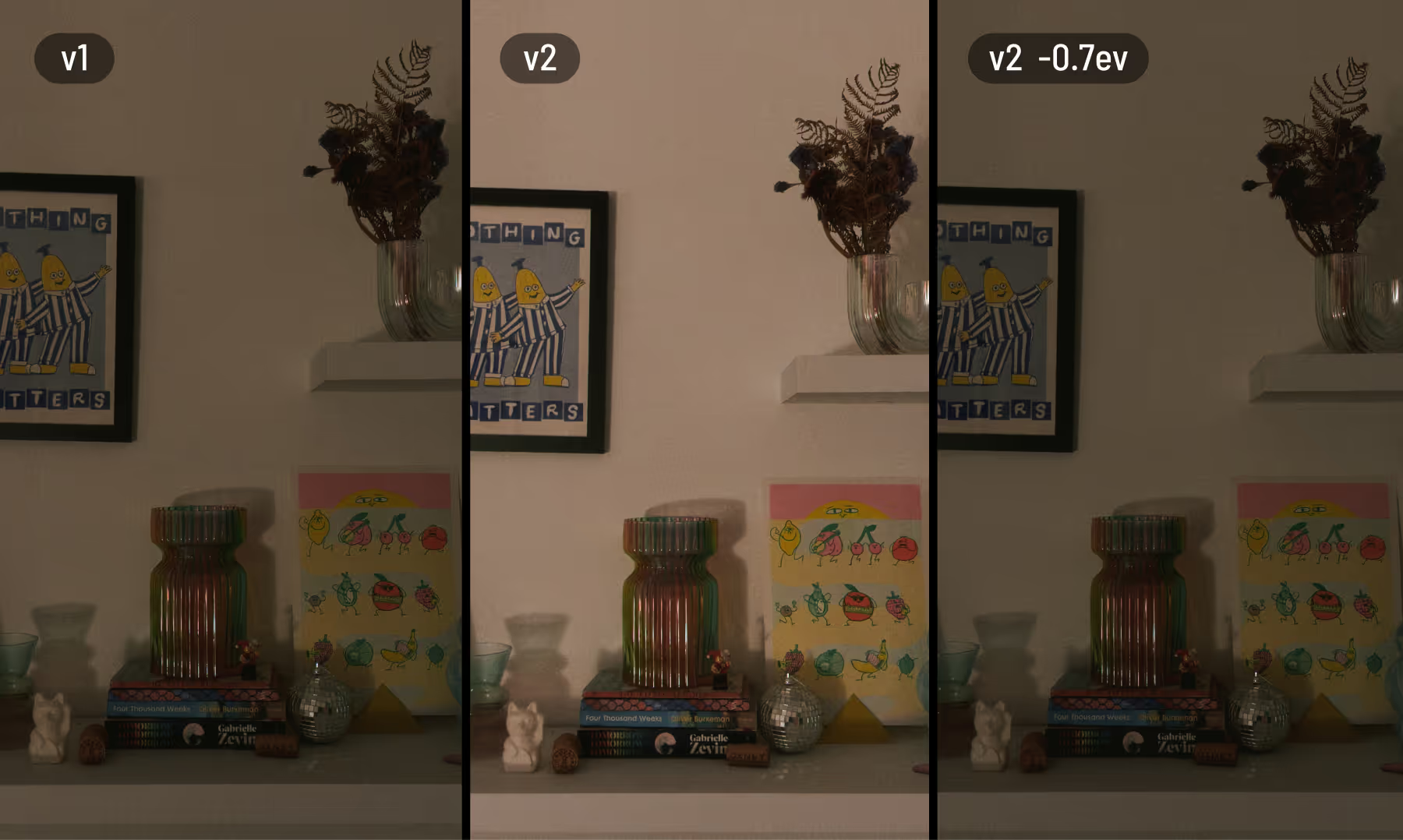
Here are some examples using DR Medium and Zero.
As you can see in the above example the old version would often under expose the image. Exposure behavior is now more consistent at lower Dynamic Range settings, and adjustments via Exposure Bias feel more predictable.
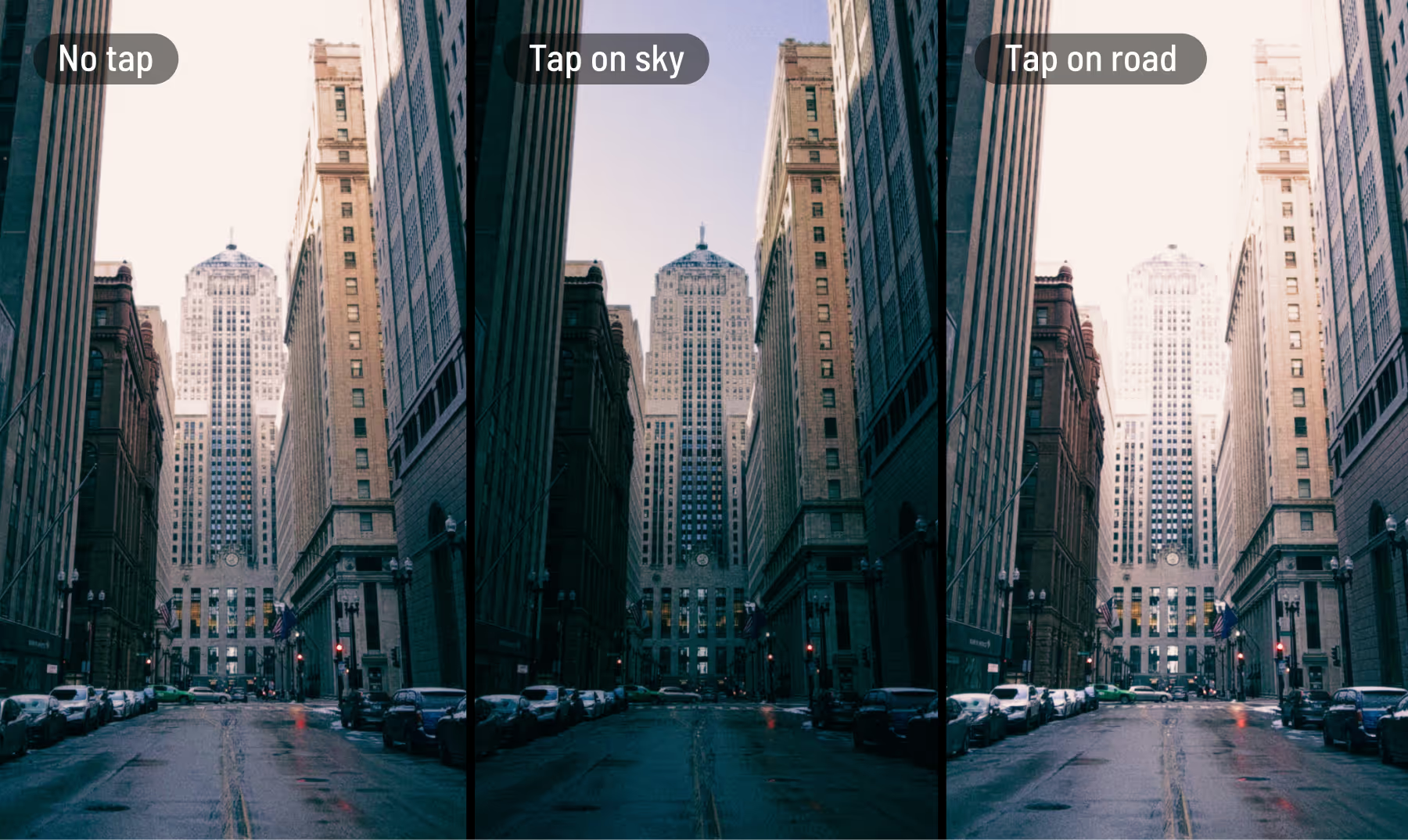
The updated version also takes into account where you tap to focus. Tapping a darker area preserves more shadow detail, while tapping a brighter area reduces blown highlights.
In testing, this has felt intuitive and gives pleasing results.
Improvements to tone mapping have enabled a more physically accurate approach to light behaviour.
Previously, bloom was applied with a uniform blur radius, meaning all tones spread light equally. This often led to a slightly muddy image and lacked the subtlety of real optical systems.
In the updated pipeline, bloom is now luminance-dependent. Brighter areas produce a stronger, softer glow, while darker regions remain largely unaffected. This results in a cleaner image with more natural highlight roll off and separation.
The examples below are using the "MAX" setting with DR Low, but you can expect lower settings to exhibit similar improvements.
Halation has been reworked in a similar way. Rather than a uniform “bleed”, it is now driven by highlight intensity. This creates a more natural rendering, closer to how light interacts with film -particularly in high contrast scenes. The effect is more restrained, but far more consistent across different conditions.
The examples below are using the "MAX" setting with DR Low, but you can expect lower settings to exhibit similar improvements.
Additionally in this update, I’ve refined how colour and contrast behave.
Saturation now works more like vibrance, having a stronger effect on less saturated colours while being more restrained with already vivid tones.
I’ve also introduced a subtle density effect inspired by film. As colours become more saturated, their brightness is gently reduced. This creates deeper, richer colours that retain detail and avoid a harsh, neon-like look.
Finally, I’ve slightly softened the contrast curve to reduce crushed blacks and harsh highlights. The change is subtle, but it helps preserve more tonal detail across the image.
Individually these adjustments are minor, but together they add another layer of character, moving further away from the typical “iPhone look.”
In this release I also completely re-worked the unsharpening algorithm to better match the output from the ProRAW pipeline.
Real iPhone photos in the filter preview - Thanks to all these changes I am able to include real images in the filter preview donated by users. This should help visualise how your photos will come out.
Updated Tone presets - The Tone settings have been updated to take advantage of the new Dynamic Range settings and have been tweaked accordingly.
Improved performance and memory usage.
Many UI and UX improvements.
© copyright mood.camera 2024